
Flat racks are representative special containers widely used for the transportation of oversized and heavy cargo.
1. Over-Height (OH) and Over-Width (OW) Criteria for Flat Racks
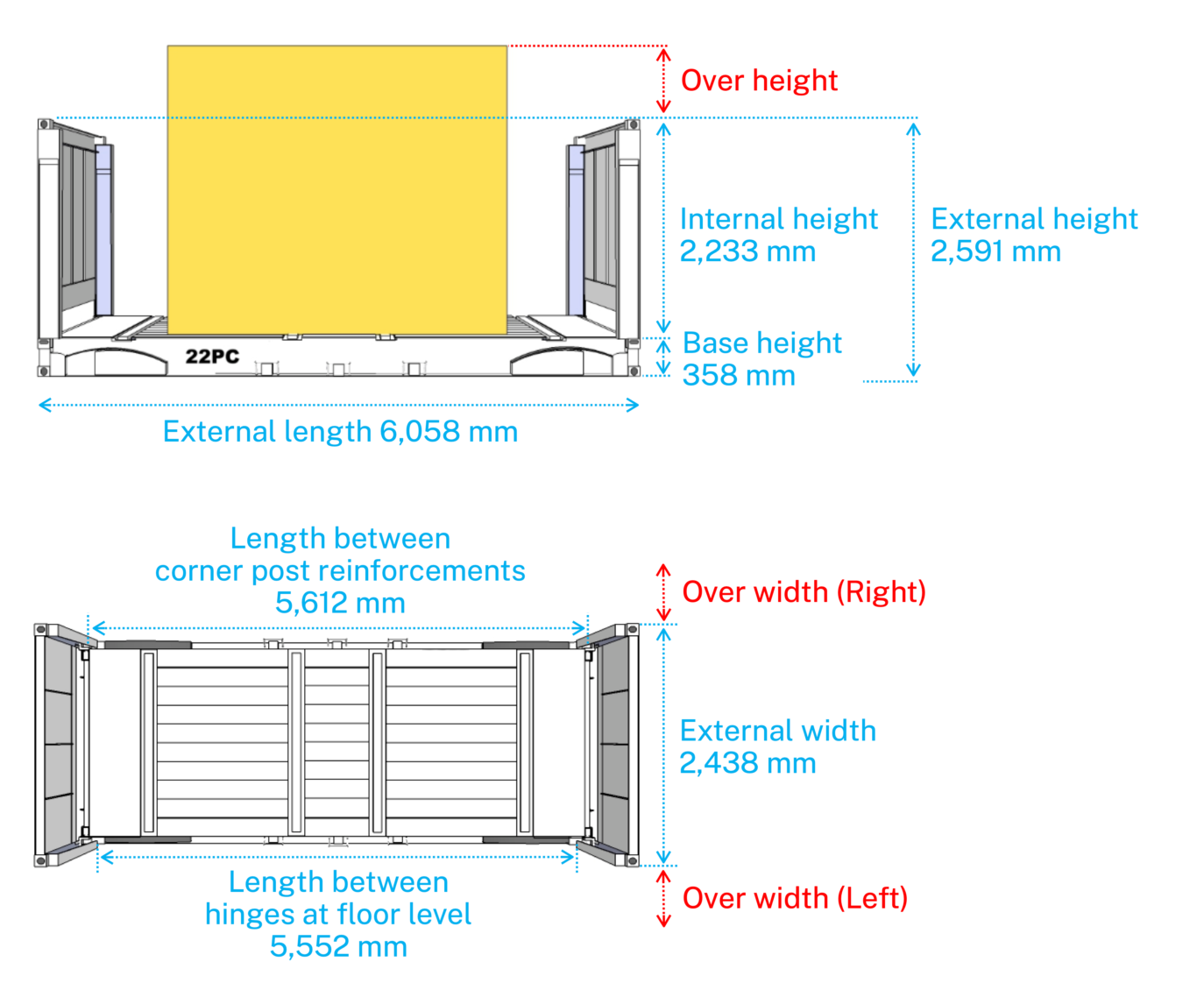
① Void Space and Freight Calculation
Freight rates for OOG cargo include charges per TEU for void space created as a result of out-of-gauge conditions.
The criteria used to determine when out-of-gauge occurs for void space calculation are defined according to each carrier’s internal standards.
② Variables Considered at the Quotation Stage
Until cargo is fully stuffed onto the flat rack and lashing is completed, it is not possible to definitively determine whether the cargo or lashing materials will protrude beyond the container footprint.
Therefore, at the freight quotation stage, estimated void space must be calculated by considering the following variables:
- Changes in final packing dimensions
- Imbalanced cargo positioning on the flat rack
- Protrusion of lashing materials
- Increase in cargo height due to installation of floor dunnage
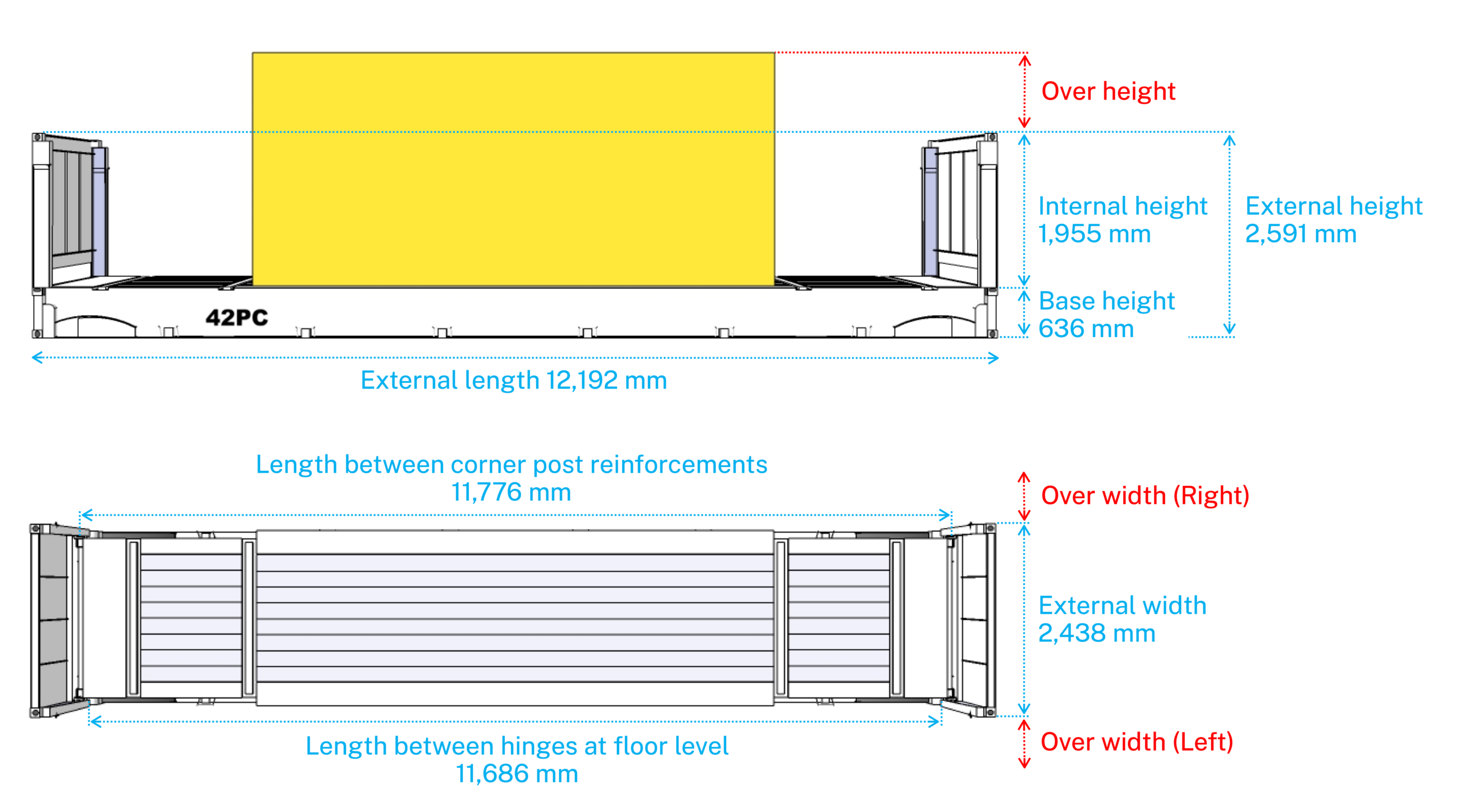
③ Common Dimensional Criteria Applied for Quotation
While detailed standards may vary slightly by carrier, the following dimensional thresholds are commonly applied at the freight quotation stage:
| 20′ FR | 40′ FR | |
|---|---|---|
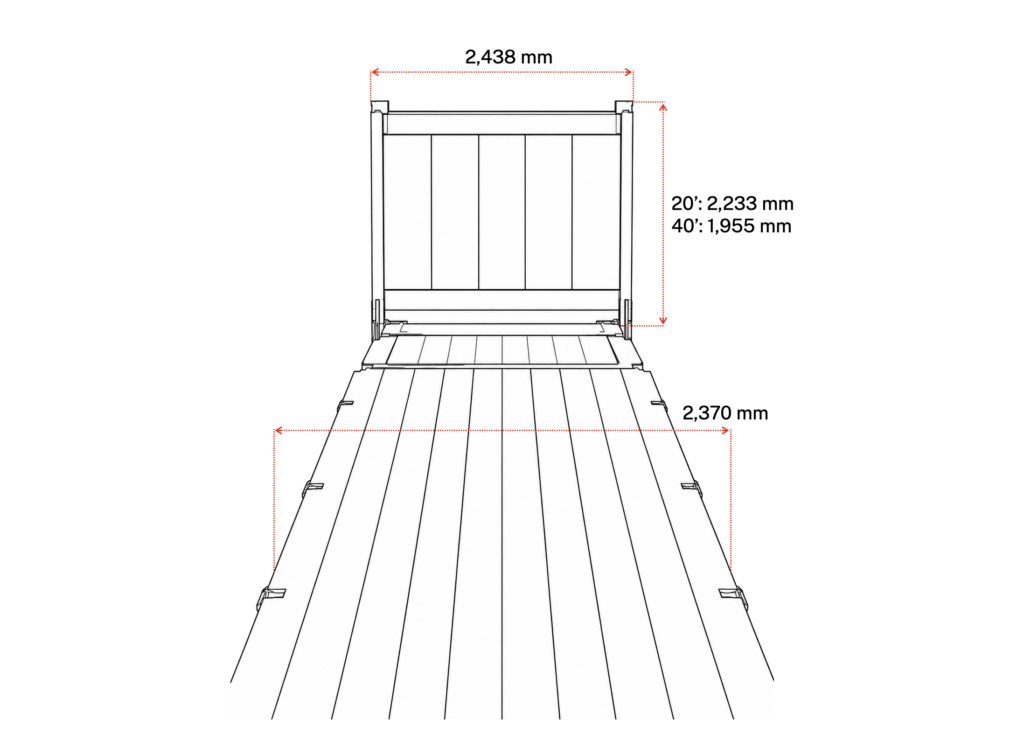
| Over-height | H > 220 cm | H > 190 cm |
| Over-width | W > 230 cm | W > 230 cm |
2. Over-Length Criteria for Flat Racks
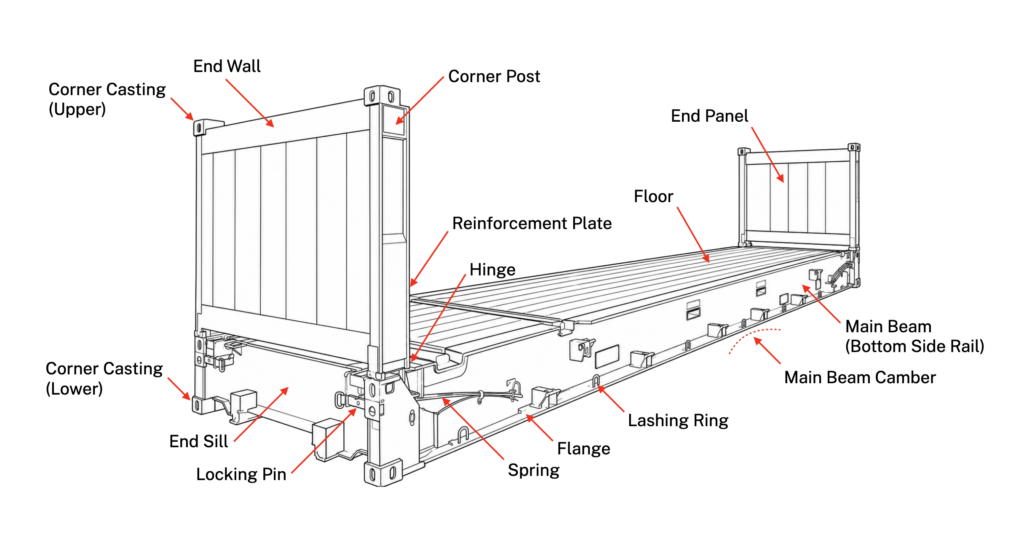
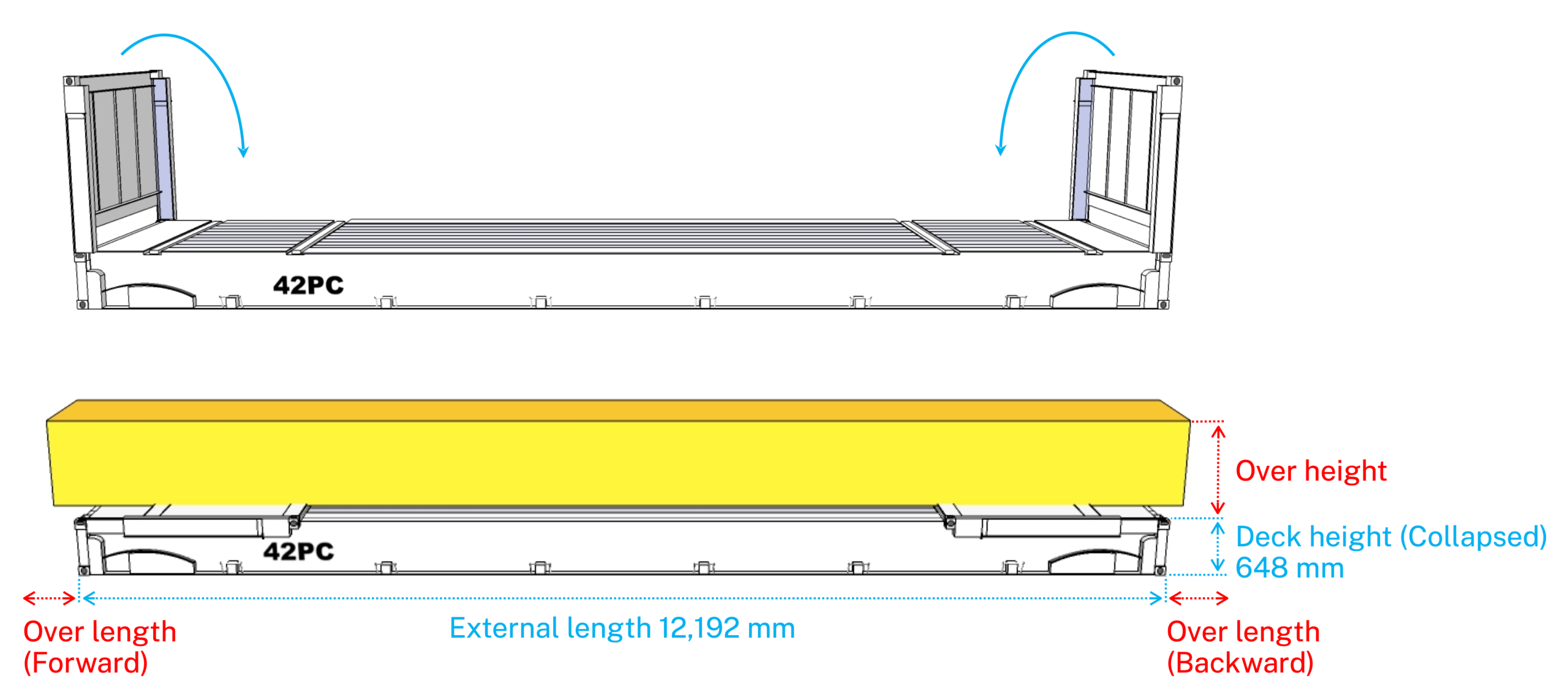
① When cargo length exceeds approximately 11.6–11.7 meters, the front and rear corner posts (end walls) of a 40’ flat rack may be folded down, allowing the container to be used in a flatbed configuration.
② When the corner posts are folded down, no containers can be stacked on top, resulting in void space above the flat rack.
Consequently, the cargo height is treated as over-height (OH).
③ If cargo protrudes beyond the front or rear ends of the flat rack, the protruding portion is classified as over-length, and the cargo is categorized as over-length cargo.
④ Over-length cargo exceeds the standard bay length of a container vessel and is therefore subject to significant restrictions in stowage position and vessel planning.
| 20’FR | 40’FR | |
|---|---|---|
| Over-height | = Cargo height | = Cargo height |
| Over-length | L > 6,058 mm | L > 12,192 mm |
3. Detailed Dimensions and Weight of Flat Racks
Detailed dimensions may vary depending on the container’s year of manufacture and production series.
| 20′ FR | 40’FR | 40’FR (HC) | 40’FR (SR) | |
|---|---|---|---|---|
| Length (External) | 6,058 mm | 12,192 mm | 12,192 mm | 12,192 mm |
| Width (External) | 2,438 mm | 2,438 mm | 2,438 mm | 2,438 mm |
| Height (External) | 2,591 mm | 2,591 mm | 2,896 mm | 2,591 mm 2,896 mm (HC) |
| Length (Internal, Between end panels) | 6,038 mm | 12,172 ~ 12,180 mm | ||
| Length (Internal, Between corner post reinforcements) | 5,612 mm | 11,652 ~ 11,776 mm | 11,615 mm | |
| Length (Internal, Between hinges at floor level) | 5,552 mm | 11,630 ~ 11,686 mm | 11,630 ~ 11,686 mm | |
| Width (Over floor / bottom side rail) | 2,194 ~ 2,210 mm | 2,230 ~ 2,374 mm | 2,374 mm | 2,374 mm |
| Width (Between corner posts) | 2,225 ~ 2,227 mm | 2,225 mm | 2,212 mm | 2,110 mm |
| Height (Internal) | 2,194 ~ 2,233 mm | 1,954~1,959 mm | 2,260 ~ 2,264 mm | 2,264 mm |
| Base Height | 310 ~ 358 mm | 520 ~ 636 mm | 632 mm | |
| Deck Height (Collapsed) | 370 mm | 579 ~ 648 mm | 648 mm | 648 mm |
| Stack Height | 2,591 mm (7 folded) | 2,591 mm (4 folded) | 2,591 mm (4 folded) | 2,591 mm (4 folded) |
| Bottom Side Rail Camber Height | 20 mm | 40 ~ 60 mm | 40 ~ 60 mm | 40 ~ 60 mm |
| Tare Weight | 2,740 ~ 3,000 kg | 4,600 ~ 5,950 kg | 5,400 kg | 5,600 ~ 6,250 kg |
| Max Payload | 31,250 ~ 42,100 kg | 39,600 ~ 47,400 kg | 50,000 kg | 39,400 ~ 50,000 kg |
| Gross Weight | 34,000 ~ 45,000 kg | 44,200 ~ 60,000 kg | 55,400 kg | 45,000 ~ 56,250 kg |